What is my house worth as-is? For a Gary house, it’s what a buyer will pay today in its current condition, with no repairs. That’s usually the house’s fixed-up value, minus the cost of repairs, minus the costs of holding and selling it, adjusted for which buyers can actually get a loan on it. The assessed value on your tax bill and the number on a home-value website are rough starting points at best.
This guide explains the different “values” you’ll see, how different buyers price a house that needs work, and three ways to get a number you can trust.
Four numbers people mix up
| Number | Who sets it | What it’s for | How close to an as-is price? |
|---|---|---|---|
| Assessed value | Lake County Assessor | Figuring property taxes | Often not close. Built for taxes, not sales. |
| Online estimate | A website’s computer model | A quick, free guess | Hit or miss, especially for older homes |
| Repaired (retail) value | The market, through recent sales of fixed-up homes | What the house could sell for after repairs | Higher than as-is when real work is needed |
| As-is value | The market, for houses in similar shape | What it sells for today, unrepaired | This is the number you’re after |
Assessed value
Indiana assesses property as of January 1 each year (IC 6-1.1-2-1.5). Assessors value thousands of parcels at once, using records and sales data. They usually don’t walk through your kitchen or basement.
State law is blunt about it. For real property, “true tax value does not mean fair market value” (IC 6-1.1-31-6). So don’t be surprised if a buyer’s number is well above or below your assessment.
If you think your assessment is too high for the house’s condition, Indiana has an appeal process with firm deadlines, generally June 15 for real property (IC 6-1.1-15-1.1). The assessor’s office can explain how it works.
Online estimates
Home-value websites use computer models built on public records and nearby sales. That can work in a neighborhood of similar, newer houses. It often struggles with older Gary homes, for a few reasons:
- The model can’t see inside. It doesn’t know about the leaking roof, the dead furnace or the water in the basement.
- Records can be out of date. Additions, finished attics or a garage that was torn down may not show up correctly.
- Nearby sales vary a lot. One block can have a fully redone house and a boarded-up one. A model blends them together.
- There may be few recent sales of truly similar houses to compare against.
Treat an online estimate as a conversation starter, not a price.
How to look up your own property record
Lake County’s official assessor site is Engage, linked from the Lake County Assessor’s page. Here’s how to use it:
- Search by owner name, address or parcel number.
- Click your parcel to open its record.
- Open Summary and Valuation List to see the assessed value over time.
- Open Improvement Info to check what the county has on file for size, year built and features. Note anything wrong.
- Check Transfer History and Sales List to see past sales of your parcel.
For your tax bills and payment history, use the Treasurer’s Tax Search and Payment site. If you see unpaid balances, read our guide to the Lake County tax sale.
How different buyers price an as-is house
Who buys your house matters as much as what’s wrong with it. Each type of buyer does slightly different math.
Buyers using a mortgage
Most retail buyers need a loan, and lenders have condition rules. FHA’s Minimum Property Requirements are meant to make sure FHA-insured loans are backed by homes that are safe, sound and secure, and an appraiser can require repairs before closing (HUD Handbook 4000.1).
Conventional loans have similar limits. Fannie Mae won’t buy a loan on a house rated C6, its worst condition rating, until repairs bring it up to at least C5 (Fannie Mae Selling Guide B4-1.3-06).
So if your house has a failing roof, no working heat or a major structural problem, many financed buyers can’t buy it as-is. Fewer possible buyers usually means a lower price.
Landlords
Buyers who plan to rent the house look at what it can earn. They figure repairs to make it rentable, plus taxes, insurance, upkeep and time with no tenant. In Gary, rentals also have to be registered with the city every year (City of Gary Building Department).
Cash buyers
Cash buyers don’t depend on a lender, so they can buy houses that won’t pass an appraisal. They typically start from the repaired value, based on recent sales of similar fixed-up homes nearby. Then they subtract:
- the repairs they see, often with a cushion for surprises
- holding costs while the work is done, like taxes, insurance and utilities
- closing and resale costs
- an amount for their risk and profit
That’s why a cash offer comes in below full retail. In exchange, you skip repairs, showings and the risk of a buyer’s loan falling through.
What moves the as-is number most
Some problems barely change a buyer’s math. Others swing it by thousands. The big ones are usually:
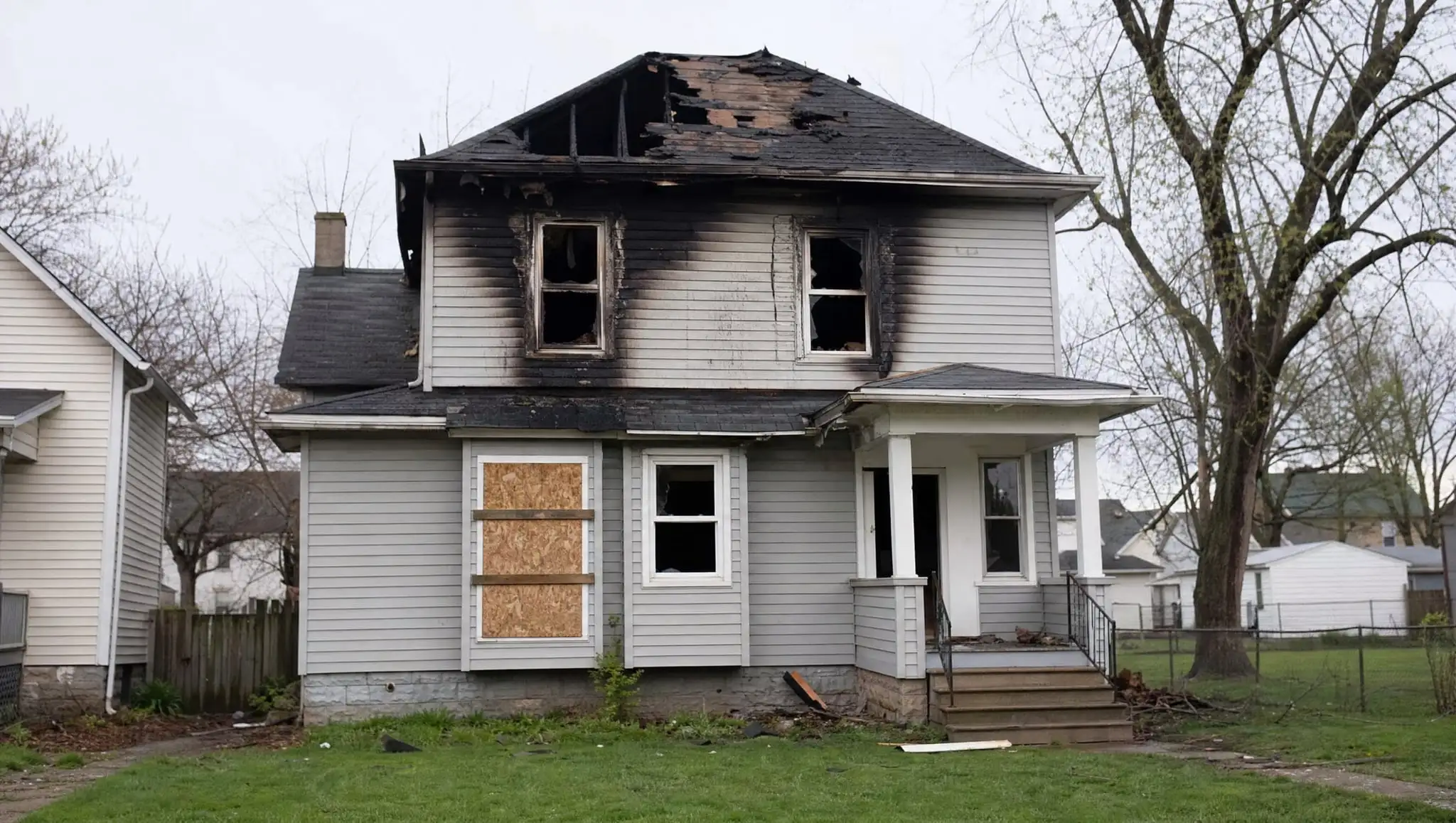
- Roof and water. Active leaks, water in the basement or foundation cracks.
- Heat, wiring and plumbing. A furnace that doesn’t run, old or unsafe wiring, or pipes that froze or went missing while the house sat empty.
- Sewer line and structure. Problems you can’t see until someone scopes the line or checks the framing.
- City orders. An unsafe building order or open permits add work and paperwork for the next owner.
Back taxes, liens and unpaid utility bills are different. They don’t change what the house is worth, but they’re paid from your proceeds at closing, so they lower what you walk away with.
A worked example (hypothetical numbers)
These are made-up, round numbers to show the math. They are not Gary market data.
Say you own a three-bedroom house. Similar fixed-up homes nearby have recently sold for about $100,000. Yours needs a roof, a furnace and a dated kitchen redone.
| Step | Hypothetical amount |
|---|---|
| Repaired value, from recent sales of similar fixed-up homes | $100,000 |
| Minus estimated repairs | −$30,000 |
| Minus holding costs during repairs | −$5,000 |
| Minus closing and resale costs | −$10,000 |
| Subtotal | $55,000 |
| Minus the buyer’s risk and profit | −$10,000 to −$15,000 |
| Likely as-is offer range | $40,000 to $45,000 |
Now compare that with fixing it yourself. Using the same made-up numbers, you’d spend about $30,000 on repairs and $5,000 holding it, then pay around $10,000 to sell. That leaves about $55,000, before counting your time and the risk that repairs run over.
So in this example, fixing up could net more, if you have the cash, the time and reliable contractors. If you don’t, or the repairs are bigger than they look, an as-is sale can be the steadier choice. Our page on selling a house that needs repairs talks through that decision.
How to get a real number
You’ll get the clearest picture by combining two or three of these.
1. A local agent’s comparative market analysis
An agent pulls recent sales of similar homes and estimates what yours would sell for, both as-is and after repairs. Agents often do this without charge when they’re competing for a listing. Ask them to show you the sales they used and how they adjusted for condition.
2. A professional appraisal
A licensed appraiser gives an independent opinion of value, for a fee. It’s worth considering when you need a neutral number, such as for an estate, a divorce or a sale between family members. For inherited homes, ask your tax professional whether a date-of-death value matters for you. Our guide on selling an inherited house in Gary covers that.
3. Written cash offers
Ask more than one buyer for a written, no-obligation offer. Then ask each one how they got there: which sales they compared, what repairs they priced and what costs they counted. A buyer who won’t explain their number is giving you less to go on.
Get ready before anyone visits
A little prep helps every estimate be more accurate:
- List the problems you know about, like roof leaks, plumbing, wiring or foundation cracks.
- Note the age of the roof, furnace and water heater, if you know them.
- Say whether the utilities are on.
- Gather any city notices or open permits. Our post on selling with code violations explains how those affect a sale.
- Take a few photos of the worst spots.
When you have an agent’s estimate and a written offer side by side, the choice gets clearer. Our cash buyer vs. agent page lays out the trade-offs, and our Gary page covers local selling details. If you’d like a written as-is number to compare, you can request an offer here.
Quick answers
Why doesn't my assessed value match what buyers are offering?
They measure different things. Indiana's assessed value is set for property taxes as of January 1, using mass appraisal, and state law says it does not mean fair market value. A buyer is pricing your specific house today, including the repairs they see inside.
Do I need an appraisal before I sell my Gary house as-is?
No, but it can help. An appraisal gives you an independent opinion of value, which is useful when an estate, a divorce or several family members are involved. If you just want a sense of the market, an agent's comparative market analysis and a few written offers may be enough.
Does a cash offer tell me what my house is worth?
It tells you what one buyer will pay today in the house's current condition. That's useful, but it isn't the same as full retail value. Compare it with an agent's estimate and, if you can, more than one written offer, and ask each buyer to show how they got their number.